On May 28, Illuminera, an IQVIA business, successfully hosted a webinar titled “Winning in China with Cross-border E-commerce(CBEC): Strategies, Models and Case Learnings”. Kevin Cai, Director, and Evelyn Chen, Associate Director, from Illuminera, shared practical insights and real-world cases, providing a systematic overview of CBEC landscape, execution pathways, and common strategic pitfalls.
>>>To access the webinar slides or watch the replay, please contact us at: marketing@illuminera.com
Convenient trade processes, preferential tax policies, and a mature commercial ecosystem have transformed cross-border e-commerce from a “window of opportunity” into a core strategic entry point for overseas brands entering China. Public data shows that in 2025, more than six new overseas brands on average launched daily via CBEC, with over 40,000 brands having entered the market to date. Among them, segments such as anti-aging supplements, OTC products and pet health have demonstrated particularly strong performance.
However, as regulatory scrutiny tightens and market competition intensifies, overseas brands are facing increasingly complex challenges: how to select the right market entry model, how to build an effective channel mix, and how to avoid common strategic pitfalls.
01
Entry Model: Selecting the Right Path Based on Product Characteristics
CBEC logistics models can be broadly categorized into three types: CBEC Bonded Warehouse, CBEC Direct Mail(B2C), and Personal Direct Mail(C2C).
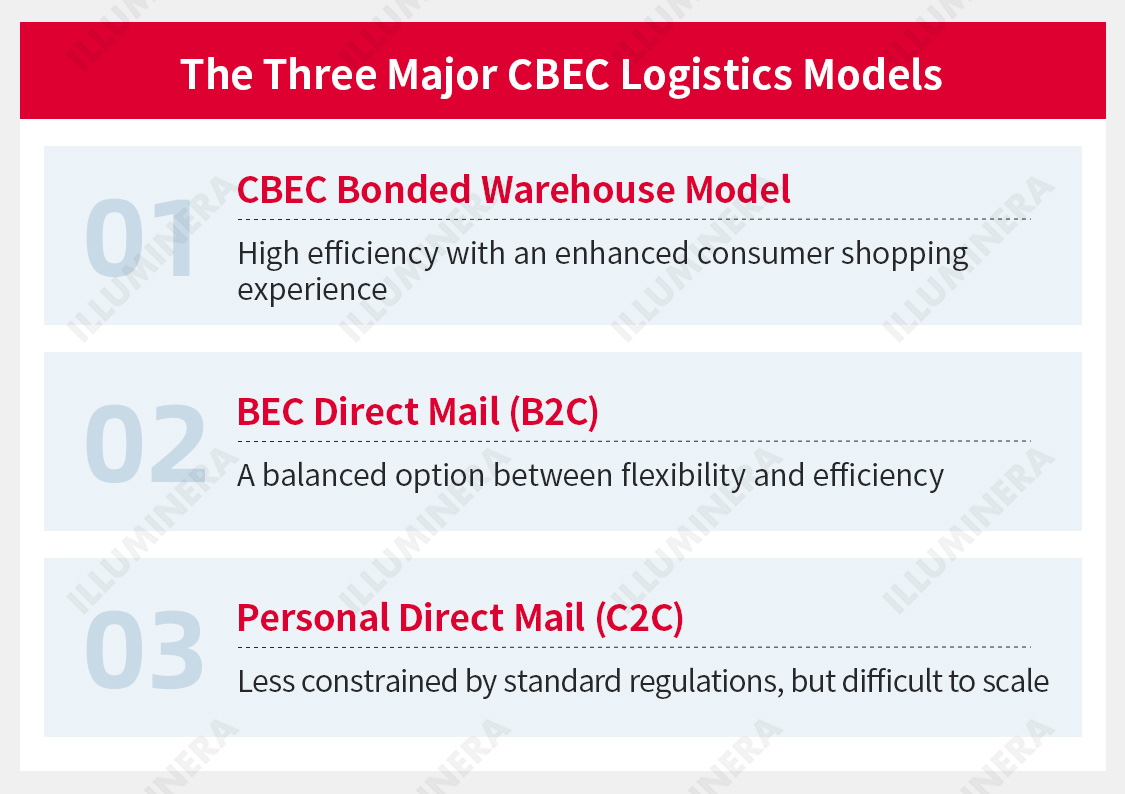
Each model is suited to different scenarios. For example, the bonded warehouse model enables faster fulfillment through pre-stocked inventory but requires strong demand forecasting capabilities - misjudgments can lead to inventory backlogs and cash flow pressure.
Therefore, at the entry stage, overseas brands should carefully evaluate factors such as whether products fall within the positive list, market demand and growth potential, supply chain responsiveness, and inventory capabilities when selecting a logistics model. In practice, more brands are adopting hybrid approaches - for example, using bonded warehouses for core products while relying on direct shipping for long-tail products or new launches.
02
Channel Strategy: From Single-Platform Entry to Omni-channel Operations
In China’s current CBEC landscape, three major platforms - Tmall Global, JD Worldwide, and Douyin Global - collectively account for approximately two-thirds of the market.
Tmall Global: A preferred primary platform for overseas brands, ideal for building initial market presence and brand reputation;
JD Worldwide: Favors products with established international recognition or existing sales in China, making it suitable for rapid scaling;
Douyin Global: Leverages algorithm-driven traffic to boost sales, supporting brands in achieving secondary growth.
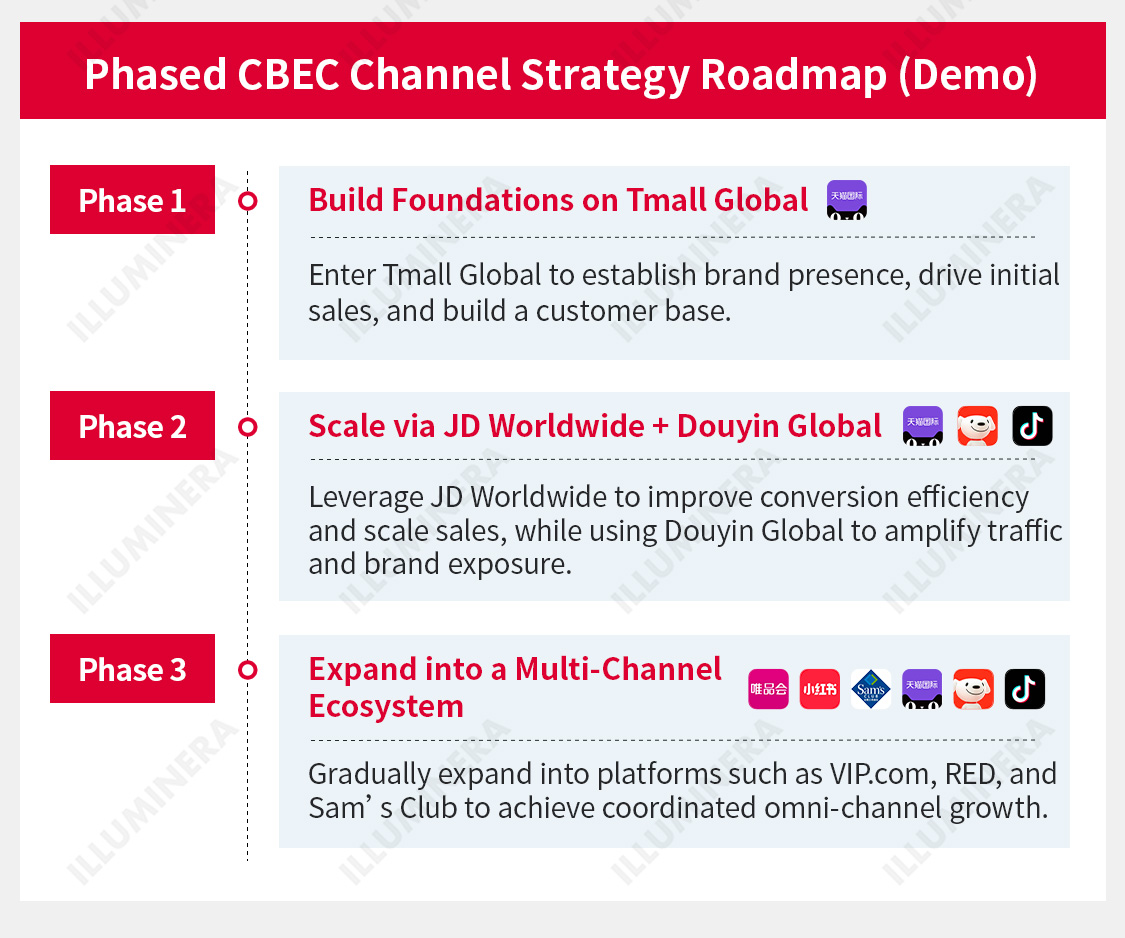
When planning e-commerce channel strategies, overseas brands should adopt a phased approach aligned with their business and product characteristics - evolving from single-platform entry to omni-channel operations. For instance, brands can initially focus resources on Tmall Global to build a foundation, then expand scale via JD Worldwide and Douyin Global, ultimately achieving diversified multi-channel distribution across platforms such as VIP.com and Sam’s Club.
03
Risk Management: Avoiding Four Common Strategic Pitfalls
In CBEC practice, we observe four common strategic pitfalls that overseas brands frequently encounter:
Misaligned operating models: Different models require varying levels of resource investment, team capability, and risk tolerance; brands should conduct comprehensive assessments before selecting an approach.
Product portfolio mismatch: Lack of localized product strategy, failing to meet Chinese consumer needs and usage scenarios.
“Copy-paste” marketing strategies: Directly replicating overseas approaches without considering local trust mechanisms and the unique Chinese marketing ecosystem.
Distorted ROI expectations: Underestimating local competition intensity and marketing costs, leading to unrealistic investment and return projections.
For overseas brands, entering the China market is not achieved overnight. The value of cross-border e-commerce extends beyond simply enabling faster entry - it provides a risk-controlled pathway for market validation while amplifying commercial returns.
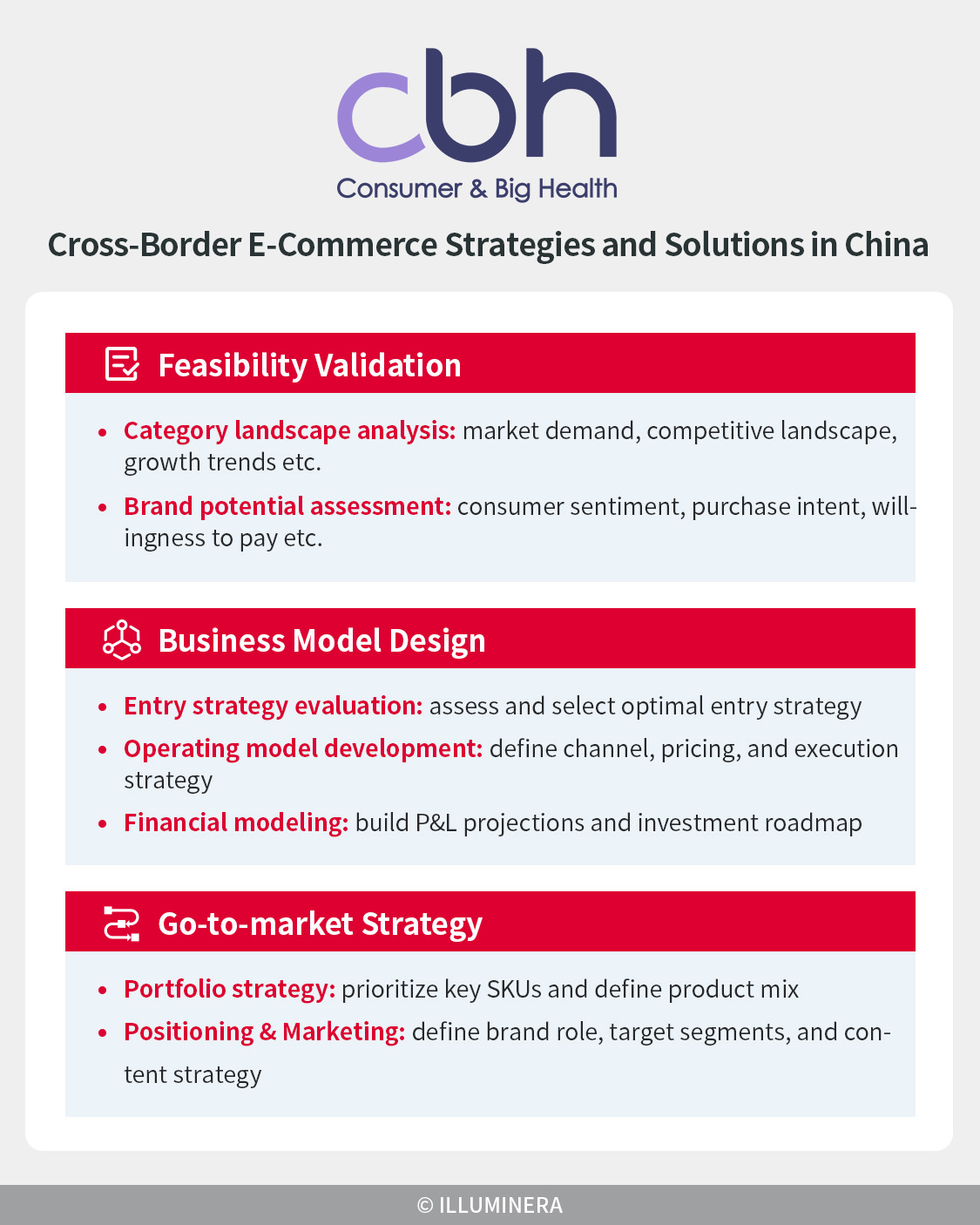
Illuminera is dedicated to helping brands build clear and comprehensive CBEC strategies and execution pathways - spanning product portfolio, brand positioning, business model design, resource assessment, and financial forecasting - enabling more overseas brands to win in China with Cross-border E-commerce.

To access the webinar slides or watch the replay, please contact us at: marketing@illuminera.com