As compliance policies tighten, digital ecosystems continue to evolve, and consumers become increasingly proactive in managing their own health, healthcare consumerization has entered a new phase - evolving from passive out-of-hospital engagement to a proactive and fully connected patient journey.
At the same time, the go-to-market model for new therapies is being fundamentally redefined. In the past, products typically followed a growth logic of “in-hospital access followed by out-of-hospital volume expansion”. Today, however, more innovative therapies are launching through digital-first channels, reaching patients directly through a growing range of out-of-hospital touchpoints.
Yet a fundamental question remains: does increased reach translate into meaningful action? Can patient education influence prescribing decisions and ultimately deliver measurable business impact? And can the significant investment in patient education content truly influence patient mindsets and drive action?
Traditional broad-reach marketing approaches are becoming increasingly ineffective. For many organizations, the challenge is no longer generating visibility. Rather, under limited resources, the key question is how to identify the “audiences most worth activating first”. Shifting from “reaching more people” to “activating the right people” is becoming a new imperative during new drug launches.
Beyond Target Segments: Identifying Bullseye Audiences

Traditional STP segmentation models focus more on “who my target users are”, typically segmenting audiences by demographics, needs, and psychographic characteristics to identify differentiated brand positioning. But in the context of out-of-hospital patient activation, this approach is not sufficient. What pharmaceutical companies truly need to answer is “who is most likely to take action now”—that is, how to precisely identify Bullseye audiences.
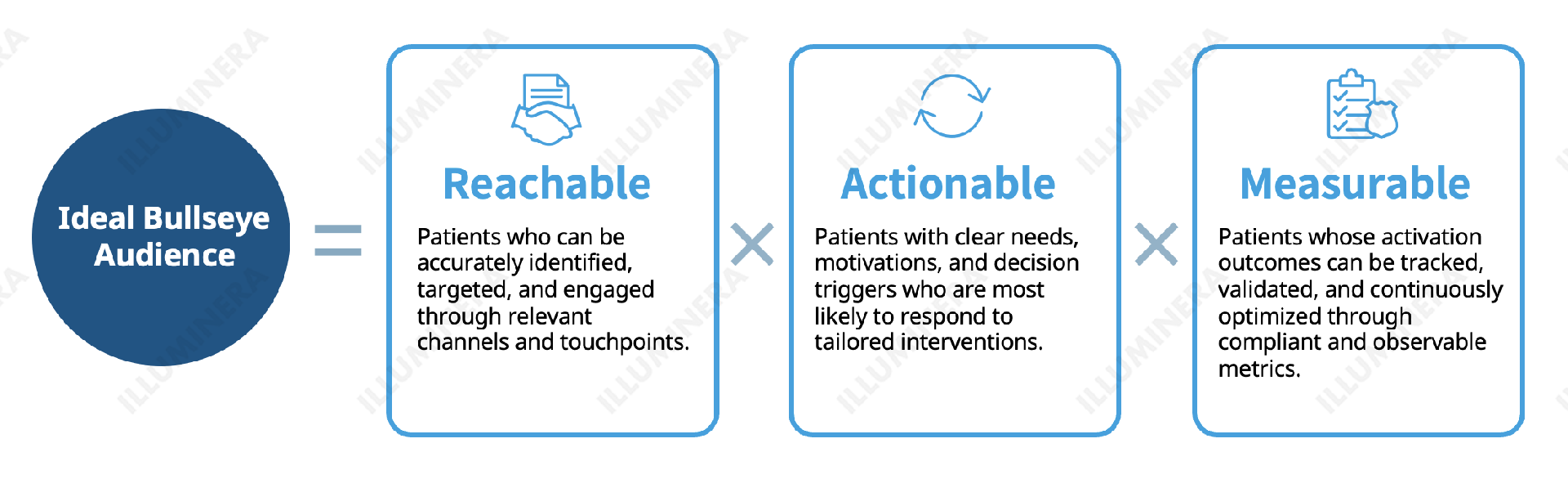
However, Bullseye audiences are not the same as target audiences. The core of audience marketing is to establish activation priorities, with greater focus on patients’ behavioral and decision-making status, and to develop tailored strategies for the Bullseye audiences with the highest potential. Ideal Bullseye audiences should meet three criteria: reachable, actionable, and measurable. They may not be the largest audience group, but they are often the most likely to generate behavioral conversion first.
Bullseye Audience Identification Begins with Patient Journey Insights

So how can we identify the audiences most worth activating first?
The answer lies in patients’ real decision-making processes. In reality, patient journeys are rarely linear. A patient's path from awareness to treatment can be influenced by clinical, emotional, social, and practical factors at every stage.
Therefore, the first step in identifying Bullseye audiences is to systematically map the patient journey and deeply understand patients’ decision-making patterns. From symptom onset, treatment seeking, diagnosis, purchase, medication use, to follow-up, pharmaceutical companies need to comprehensively understand patient behavior and identify the key behavioral triggers, barriers, and moments of truth that shape patient decisions. These signals are better predictors of whether patients will take action.
Effective Bullseye Activation Starts with Understanding the Human Behind the Patient

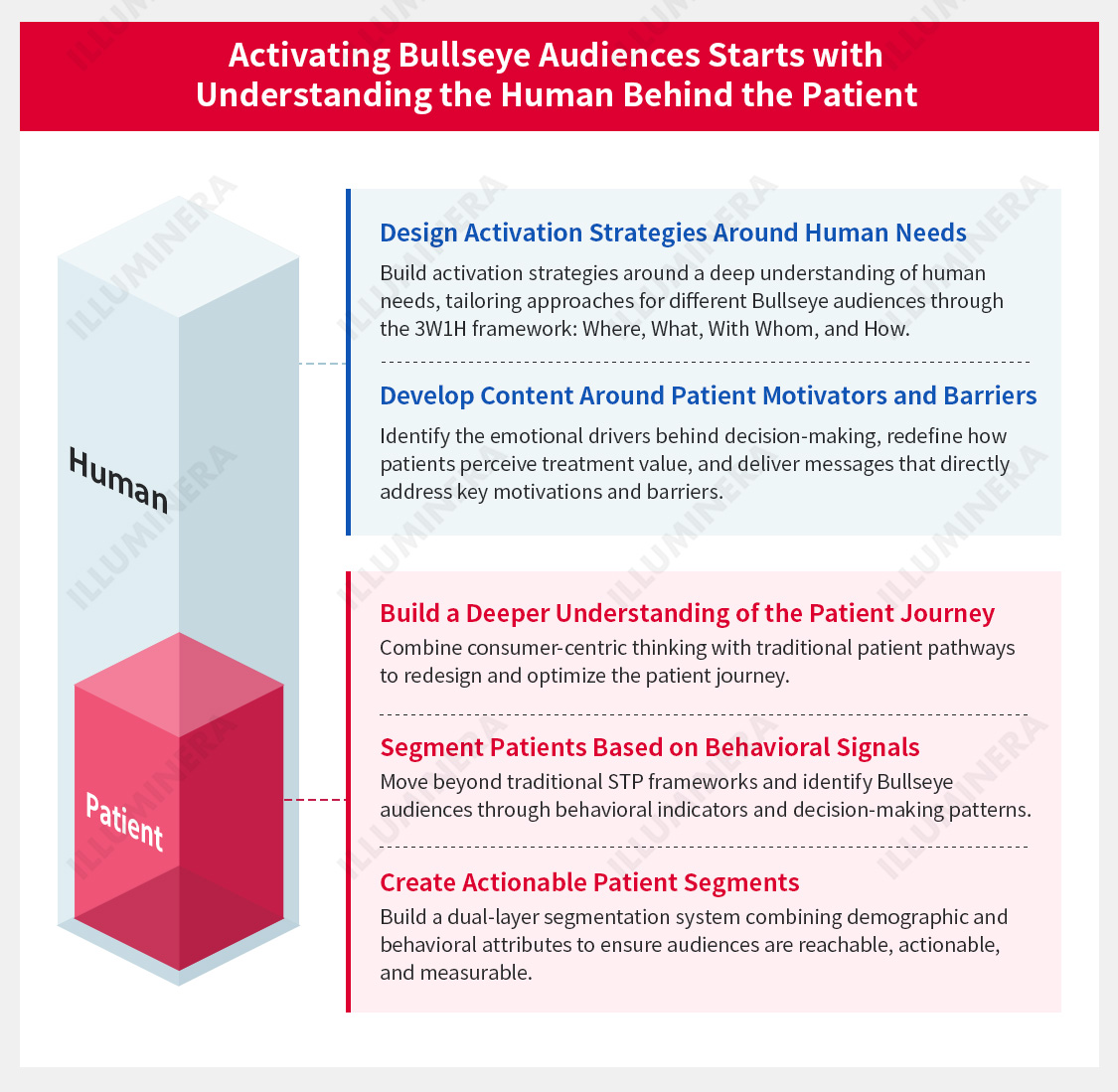
Identifying Bullseye audiences is only the first step. More importantly, pharmaceutical companies need to build differentiated activation strategies for different audience groups. This requires not only a robust audience identification and activation framework, but also a deeper understanding of the real motivations behind patient behavior.
On the surface, many patients may seem to care about drug price, efficacy, or convenience. But at a deeper level, what matters to them may be maintaining independence, fulfilling family responsibilities, preserving professional identity, and reducing uncertainty about the future. Therefore, when pharmaceutical companies understand and respond to these deeper needs, patients are more likely to be activated.
At its core, effective patient activation is about understanding the human behind the patient. By connecting with the motivations behind behaviors - not just the behaviors themselves - pharmaceutical companies can create more relevant, personalized, and effective activation strategies.
END
As the consumerization of healthcare enters the 2.0 era, launching a new drug remains a challenge akin to “dancing in shackles”. Success in healthcare consumerization will not come from simply replicating consumer marketing tactics.It requires a deeper understanding of patients—and of the “human” behind behaviors and decisions.
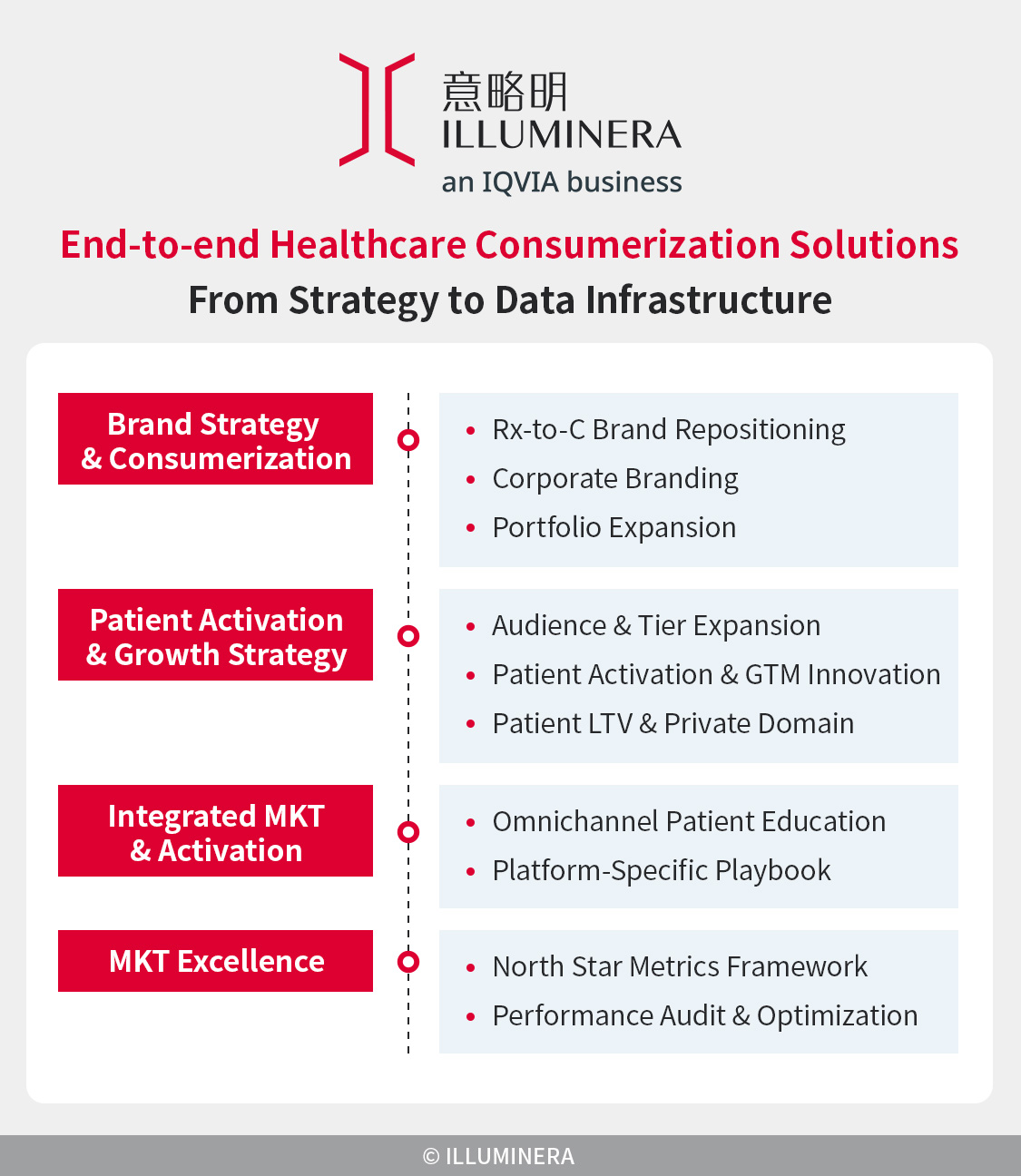
Leveraging its dual expertise across consumer goods and healthcare, as well as multi-source data insight capabilities, Illuminera helps pharmaceutical companies precisely identify Bullseye audiences, systematically understand patient cognition, behavior, and decision-making logic, and translate insights into executable and verifiable patient activation strategies—supporting companies in making the critical leap in new drug launches.

For more relevant information, please send an email to marketing@illuminera.com.